Team-building ideas for businesses: from creative to strategic
A strong team is not built through shared projects alone. It needs opportunities for colleagues to experience one another outside their established roles, discover new sides of each other and create something together. This is exactly where well-designed team-building ideas can provide the right setting.
What matters, however, is not how spectacular an activity sounds. Good team building suits the team, pursues a clear objective and gives everyone enough space to contribute in their own way. Sometimes, this calls for a creative challenge. Sometimes, a shared culinary experience. And sometimes, a strategic workshop that focuses on improving collaboration in practical terms.
In this article, you will find ten team-building ideas for companies – from an art night and a barista course to a team canvas workshop. You will also find honest advice on choosing an activity, planning the event and finding the right venue. This turns an enjoyable item on the agenda into an experience that truly suits the team.
Why team building needs more than an entertaining programme
Team building is often associated with fun, competition and shared activities. These are all part of it, but they are not the whole story. A single event will neither resolve long-standing conflicts nor replace clear responsibilities, good leadership or reliable communication in everyday working life.
What well-planned team building can achieve is to create a safe space for interaction. Employees can talk to one another outside their usual tasks, experience different strengths and create shared memories. This can make it easier to take the first steps towards better collaboration – provided that the event is not presented as a compulsory exercise.
Before choosing an idea, you should therefore clarify your objective. Does a newly formed team need to get to know one another? Do you want to regain energy after an intense project phase? Is the focus on trust, communication or a shared strategic direction? The more specific the answer, the easier it is to choose a format that not only entertains but also provides meaningful support.
10 team-building ideas for creative, active and strategic teams
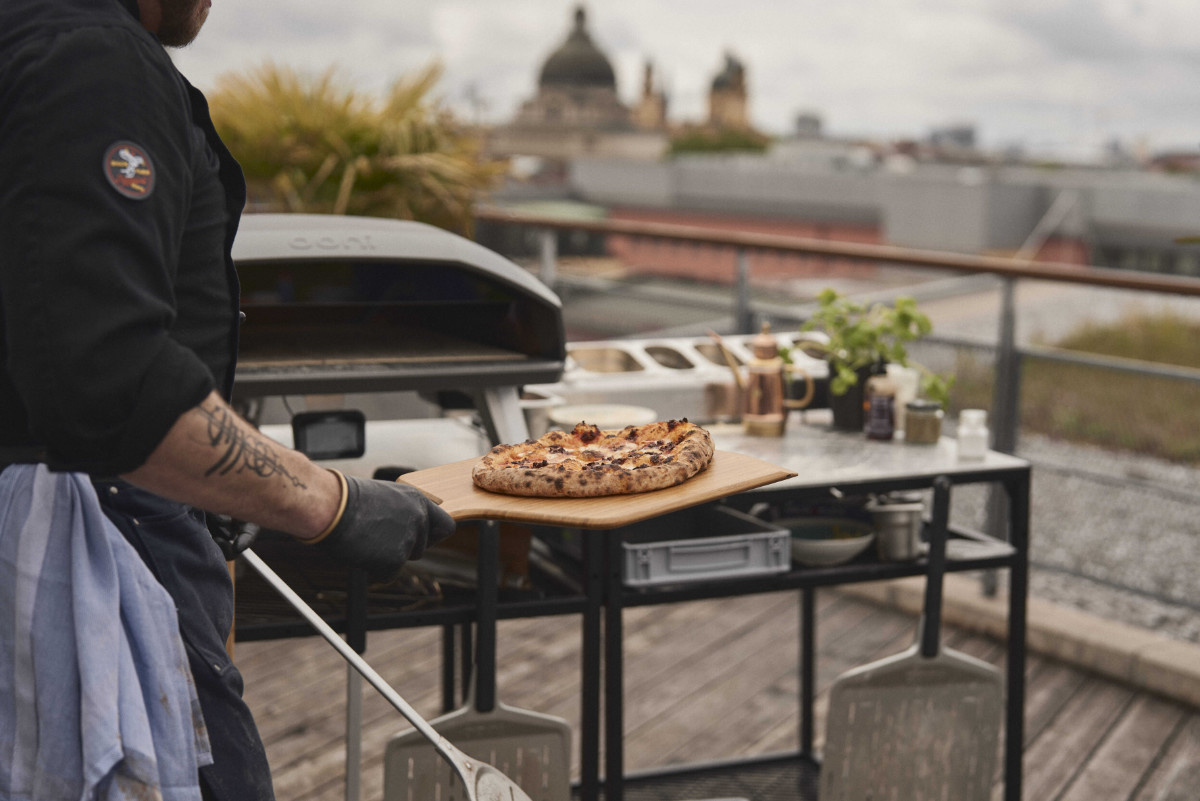
1. Create-your-own event: from pinsa and pizza to burgers
Adding toppings, creating your own combinations and enjoying the results together: a create-your-own event is straightforward, sociable and suitable for many different team sizes. Whether you choose pinsa, pizza or burgers, small groups develop their own creations, combine ingredients and give their dishes a suitable name. At the end, the results can be presented and, of course, tasted together.
To prevent only the loudest team members from taking the lead, it is worth assigning a few different roles: Who develops the concept? Who selects the ingredients? And who takes care of plating and presentation? This encourages collaboration without making the activity feel artificially like a training exercise.
Vegetarian, vegan and low-allergen options are important so that every team member can participate and enjoy the food. The competitive element should also remain light-hearted: the goal is not to create the most visually perfect dish, but to enjoy the shared creative process and finish with a delicious meal in a relaxed atmosphere.
2. An exciting quiz night with challenging questions
A quiz night adds energy to the evening and can be tailored to the individual company. Alongside questions about music, films and general knowledge, as well as estimation questions, humorous categories based on the team’s history can also be included. Personal questions should always remain optional and respectful.
For genuine team building, the composition of the groups is more important than the difficulty of the questions. Mix departments, levels of experience or locations so that people who rarely interact in their everyday work have the opportunity to collaborate. Different types of questions allow different strengths to shine, including logic, creativity, knowledge, observation and quick decision-making.
A quiz night will not automatically improve collaboration. However, it can provide an accessible way to start conversations, soften hierarchies and create a shared sense of achievement.
3. Escape game challenges
An escape game makes collaboration immediately visible. Under time pressure, participants must share clues, identify connections and divide tasks effectively. The escape game challenge can be organised directly at our event venues. Depending on the group size and game concept, individual areas can be flexibly transformed into separate puzzle stations. This allows several teams to compete against one another at the same time without having to move to an additional room.
The challenge becomes particularly valuable when followed by a short reflection: What worked well? Was information shared openly? Who provided structure and who introduced new perspectives? These questions should not be used to assess individual participants. The game merely shows behaviour within an artificial situation and does not allow any reliable conclusions to be drawn about the team’s overall dynamics.
You should also make sure that the tasks do not focus solely on speed or mathematical ability. A good mix of visual, verbal and practical puzzles allows more participants to contribute.
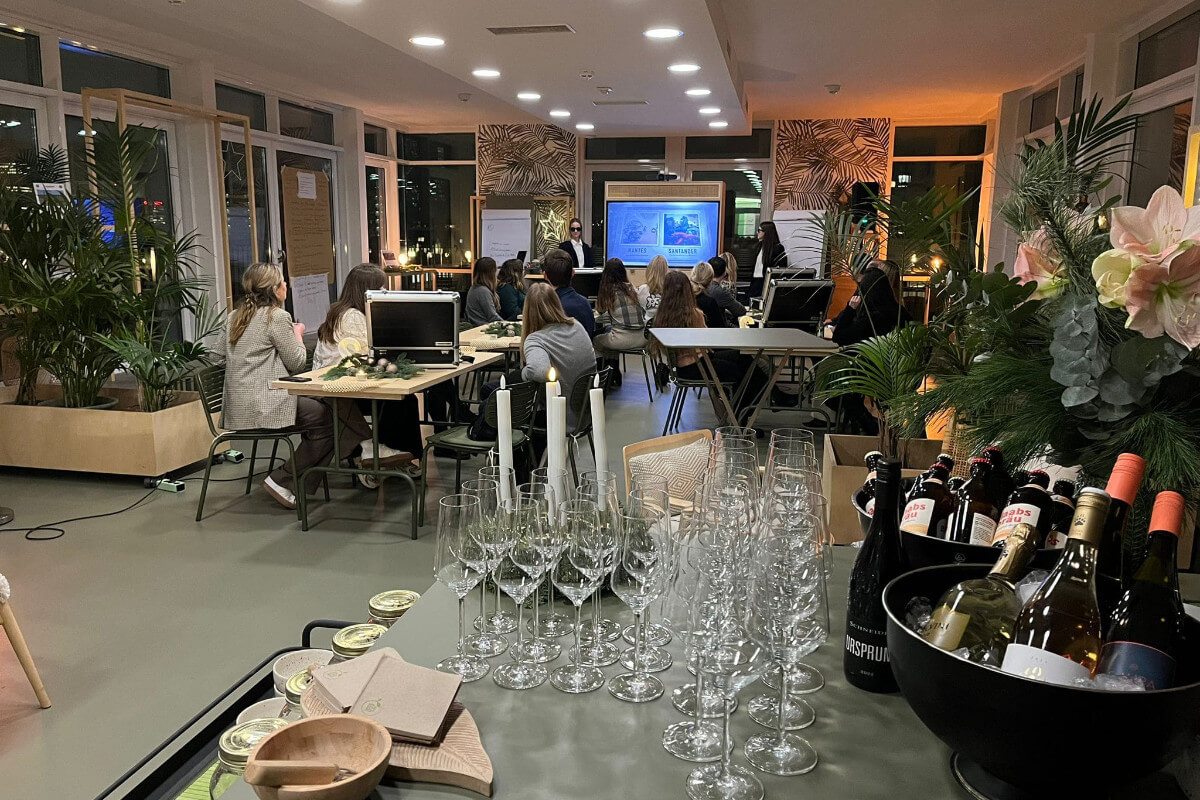
4. A creative art night
During an art night, the team works with colours, shapes and materials instead of presentations and spreadsheets. Participants can create individual canvases, collaborate on a large-format picture or produce several elements that are ultimately combined into one complete work of art.
This format is particularly suitable for teams looking for a deliberate change of perspective. Artistic talent is not required. Good facilitation removes the pressure to perform and provides simple prompts without dictating every outcome. Displaying the finished artwork in the office afterwards creates a visible reminder of the shared process.
To be honest, not everyone enjoys painting. Alternative roles such as planning the design, developing the colour concept or documenting the activity ensure that nobody feels pressured into expressing themselves creatively.
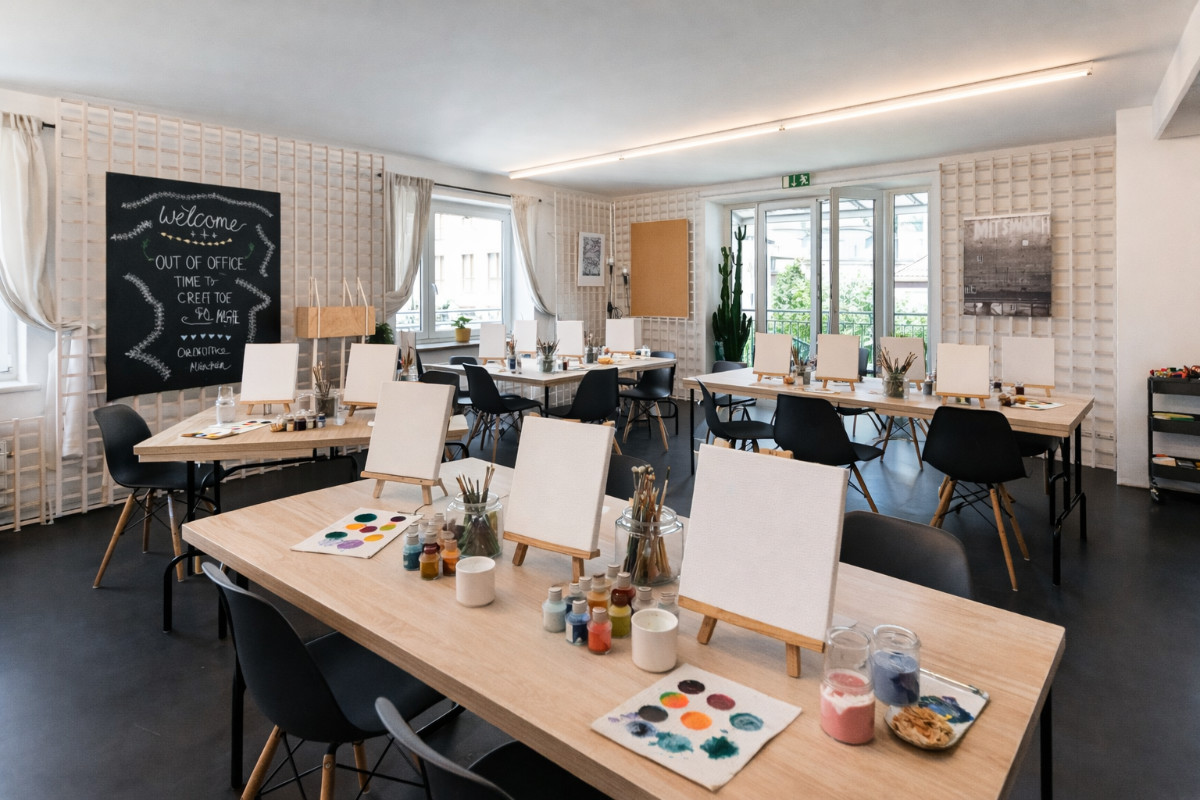
5. Outdoor team challenges with genuine collaborative tasks
Outdoor team challenges range from team Olympics and orienteering games to collaborative construction and coordination tasks. Formats in which communication and joint decision-making matter more than individual peak performance are particularly effective.
Avoid activities that embarrass participants, force them into close physical contact or make physical fitness a requirement for taking part. Offer different levels of difficulty and alternative roles. This allows athletic, strategic and communication skills to complement one another.
A short transfer exercise afterwards is worthwhile: Which way of working led to success? Where did assumptions make collaboration more difficult? Two or three specific observations are enough. A lengthy analysis can unnecessarily slow down the positive energy created by the activity.
6. An aromatic barista course
During a barista course, teams learn about coffee beans, grind size, extraction and milk foam. The format appeals to the senses, encourages conversation and slows down the pace of a typical event. In small groups, participants can adjust espresso settings, experiment with latte art and develop their own alcohol-free signature drinks.
The course is well suited to teams that want to combine enjoyment with learning something new together. To ensure that nobody is excluded, decaffeinated drinks, different types of tea and plant-based milk alternatives should naturally be available.
The team-building effect has less to do with the coffee itself and more to do with experimenting together. Mistakes are visible but harmless. This creates a relaxed learning environment in which colleagues give one another tips and quickly start talking.
7. Team canvas workshop – shaping collaboration strategically
Not every team-building activity needs games or action. A facilitated team canvas workshop is particularly suitable for new teams, changing roles or the beginning of an important project. Together, the team clarifies objectives, responsibilities, expectations, communication channels and rules for collaboration.
To prevent the result from becoming an abstract poster, the workshop should conclude with a small number of specific agreements: How do we make decisions? When do we escalate blockers? Which information do we share through which channel? Who is responsible for the next step and by what date?
When conflicts already exist, neutral facilitation is advisable. A workshop can make tensions visible, but it should not open them up without sufficient time and appropriate support. When implemented correctly, the format combines strategic clarity with genuine participation.
8. Improvisational theatre – reacting spontaneously and building on ideas together
In improvisational theatre, scenes are created without a fixed script. Participants pick up on ideas, react spontaneously and develop a story together. This does not train professional skills in a scientific sense, but it can playfully demonstrate the importance of listening, accepting ideas and building on them when working together.
An experienced facilitator begins with simple exercises before moving on to short scenes. Nobody should be pressured into giving a solo performance. Exercises in pairs or groups reduce inhibitions and create a sense of security.
The format is suitable for open-minded teams that enjoy movement and humour. For more reserved groups, a gentler version involving storytelling, frozen images or the joint development of characters may be more appropriate.
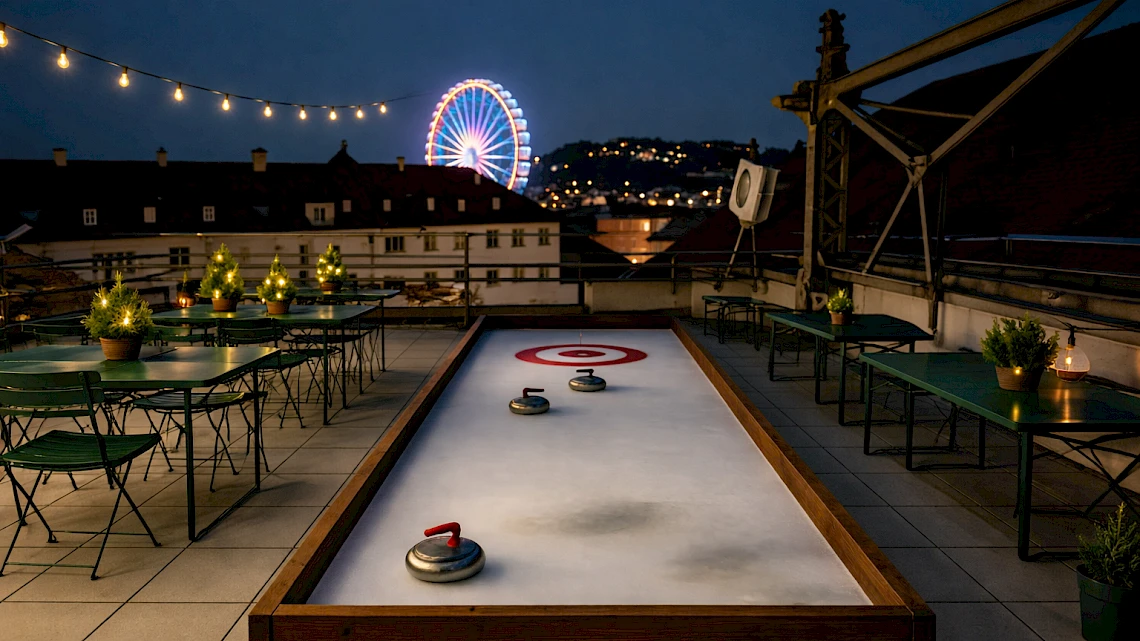
9. Minigolf on the rooftop terrace
Minigolf combines friendly competition with plenty of time for conversation. At our OutOfOffice locations with rooftop terraces, the activity also creates an urban outdoor atmosphere – ideal for summer parties, after-work events or a relaxed conclusion to a workshop.
Small teams can play several holes and complete bonus challenges along the way. The sporting demands should deliberately remain low. The goal is not to crown the best golfers, but to create movement, interaction and a shared sense of light-heartedness.
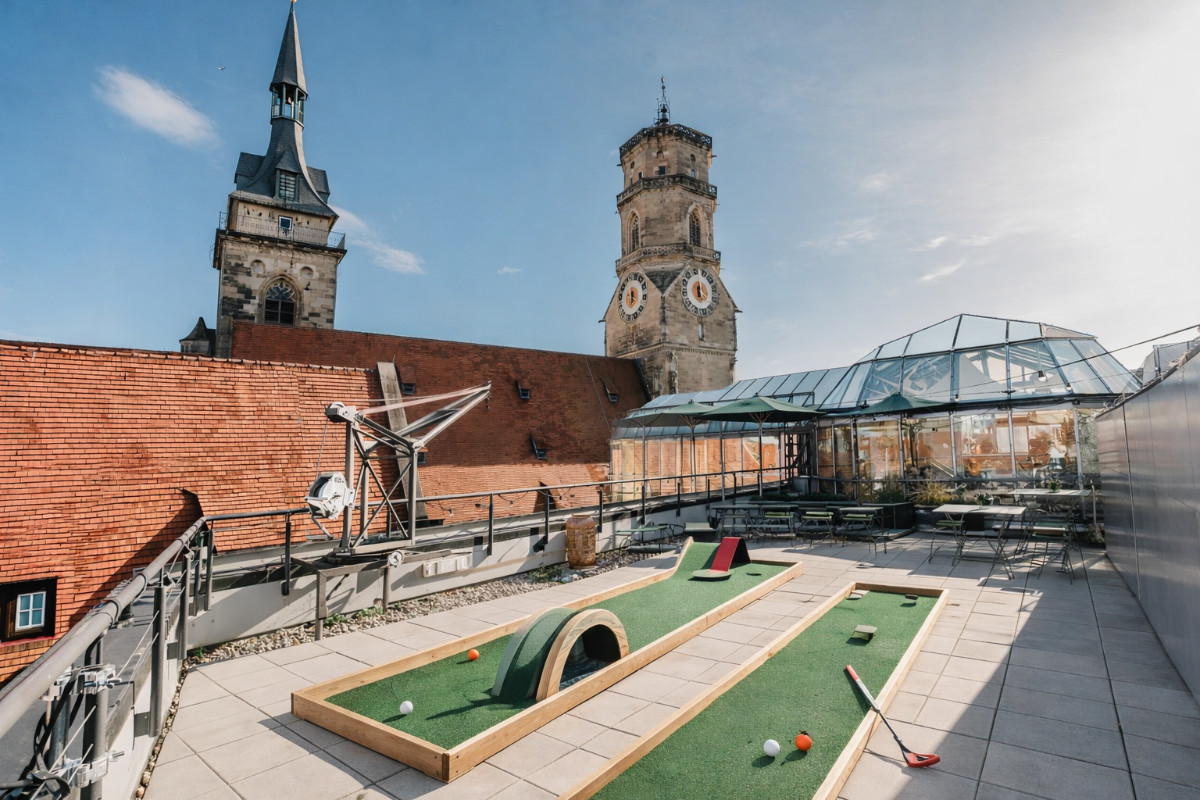
10. Team chain reaction – setting something big in motion together
For this team-building idea, the team uses different materials to develop the longest possible chain reaction. Balls roll down ramps, dominoes fall and self-built mechanisms trigger the next step one after another. Each small group is responsible for its own section – and in the end, all the elements must work together reliably.
The format encourages coordination, creative problem-solving and a constructive approach to setbacks. After all, the complete chain reaction rarely works on the first attempt. It is therefore important to allow enough time for testing and improvement. The focus should not be solely on achieving a perfect final result, but on the shared development process.
Which team-building idea suits your objective?
The best idea is not automatically the most original one. It is the idea that suits the team’s current situation. Accessible formats such as a quiz night, barista course or create-your-own pizza event work well for an initial introduction. They create opportunities for conversation without requiring participants to reveal too much personal information.
When the focus is on communication and cooperation, escape games, outdoor challenges or improvisational theatre provide more interaction. An art night or minigolf on the rooftop terrace can offer a change of perspective and renewed energy. When roles, objectives or processes need to be clarified, a team canvas workshop is more honest and helpful than a purely recreational programme.
When making your choice, you should also consider the team culture. A competitive format may motivate a well-established group, but it can create additional pressure within a team that is already experiencing tension.
A short anonymous survey beforehand can be helpful. Do not ask only about participants’ preferred activities, but also about limitations and clear no-go areas. This avoids an arbitrary majority decision and provides a realistic basis for choosing a format that as many people as possible will genuinely enjoy.
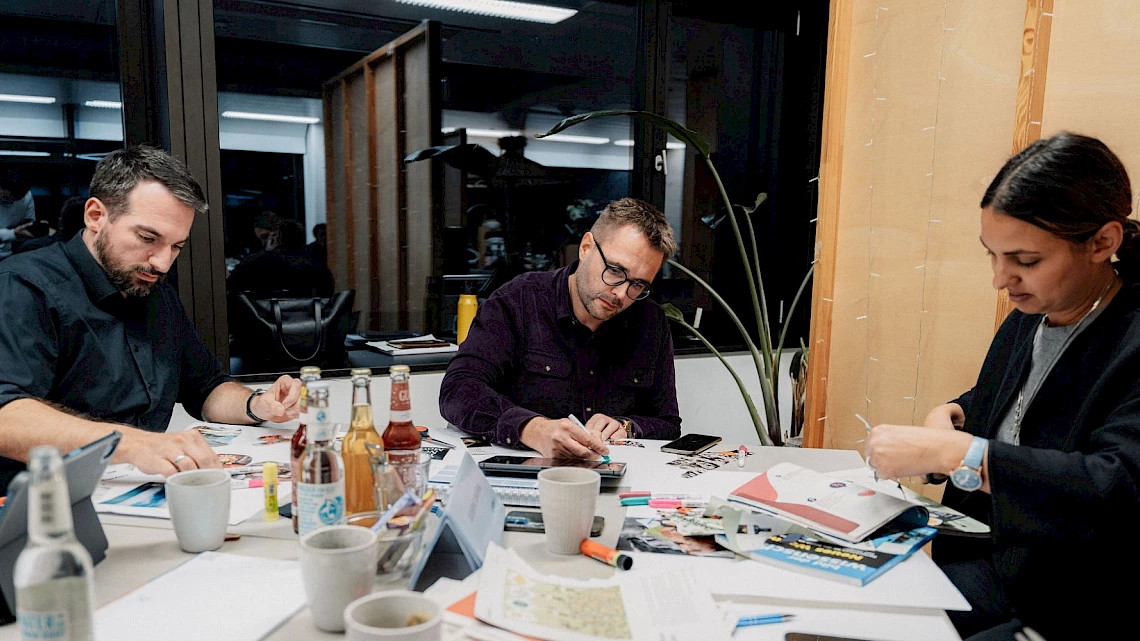
Planning team building: turning an idea into a coherent experience
Define the objective and criteria for success
Before you begin planning, complete one simple sentence: “After the team-building event, we want to …” The answer might be to get to know new colleagues better, establish shared working agreements or deliberately come together after completing a project. Achieving a measurable change in company culture after a single afternoon would not be a realistic objective.
Make participation voluntary and accessible
Team building works poorly when people feel under physical, emotional or social pressure. Communicate the schedule, clothing requirements, level of activity and catering arrangements at an early stage. Offer alternative tasks where necessary. Voluntary participation does not mean that the event is unimportant – it demonstrates respect for different personal boundaries.
Allow enough time for interaction
A packed schedule may appear professional, but it often leaves too little room for spontaneous conversations. Deliberately plan time for arrivals, breaks and a relaxed conclusion, such as an after-work event. These are often the moments of interaction that the team remembers most positively afterwards.
Choose facilitation that suits the format
An entertaining host is sufficient for a quiz night. Strategic workshops or sensitive reflection sessions, on the other hand, require methodological expertise and neutrality. The manager should not automatically facilitate the session when they are personally involved in the issues being discussed.
Ensure that the results transfer into everyday work
For experience-based activities, a brief conclusion is sufficient: What are we taking away from this? What would we like to maintain in our everyday work? For strategic team building, responsibilities and a follow-up date should be defined. Without a clear next step, even good agreements are quickly forgotten.
Finding the right venue for your team-building event
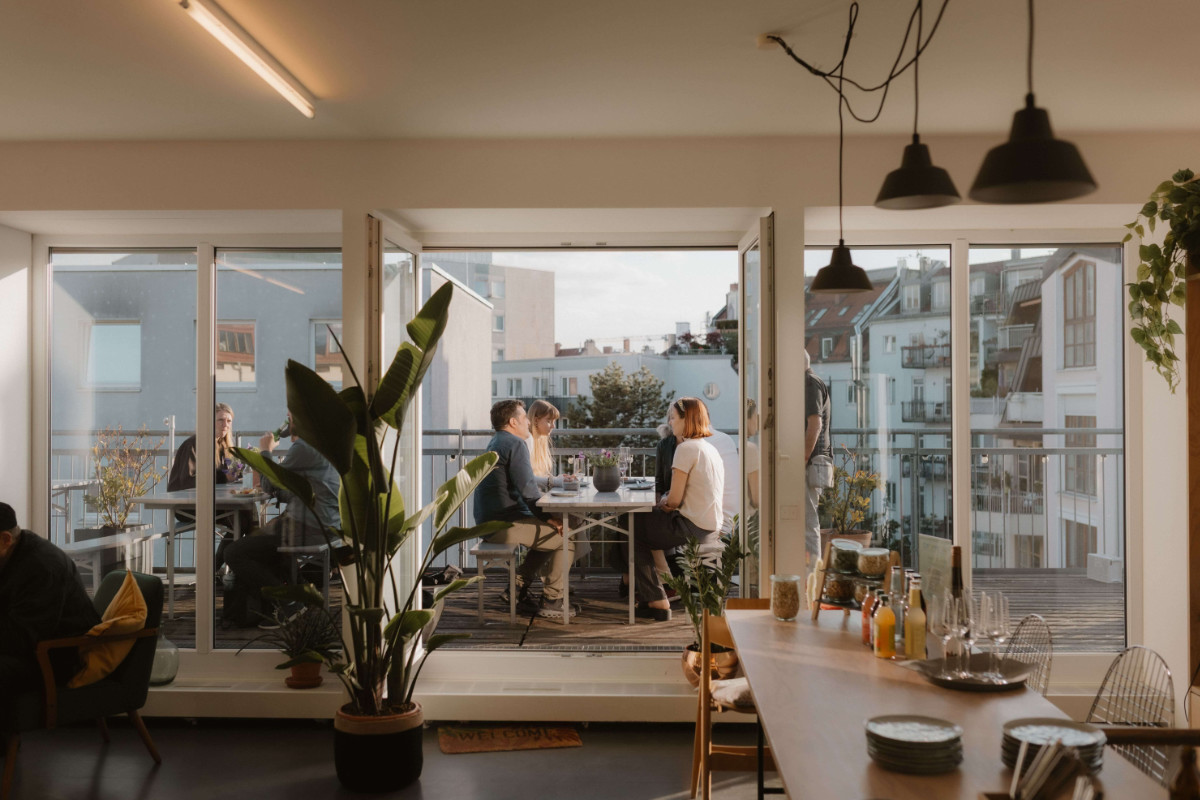
The venue influences how openly, attentively or comfortably team members interact with one another. A traditional conference room may work well for confidential discussions. For creative team-building ideas, however, it is often worth choosing an environment that deliberately creates some distance from everyday office life.
Make sure there is enough space for the planned activity, as well as flexible furniture, reliable technology and areas where participants can withdraw when necessary. Natural light, good acoustics and pleasant ventilation may be less spectacular than an unusual design, but they have a significant influence on how comfortable a group feels over several hours. A weatherproof alternative is essential for outdoor programmes.
Accessibility is also important. A centrally located team-building venue reduces additional travel time and makes it easier for participants to attend. For programmes consisting of several elements, it is practical to hold the workshop, activity, catering and relaxed conclusion in the same location.
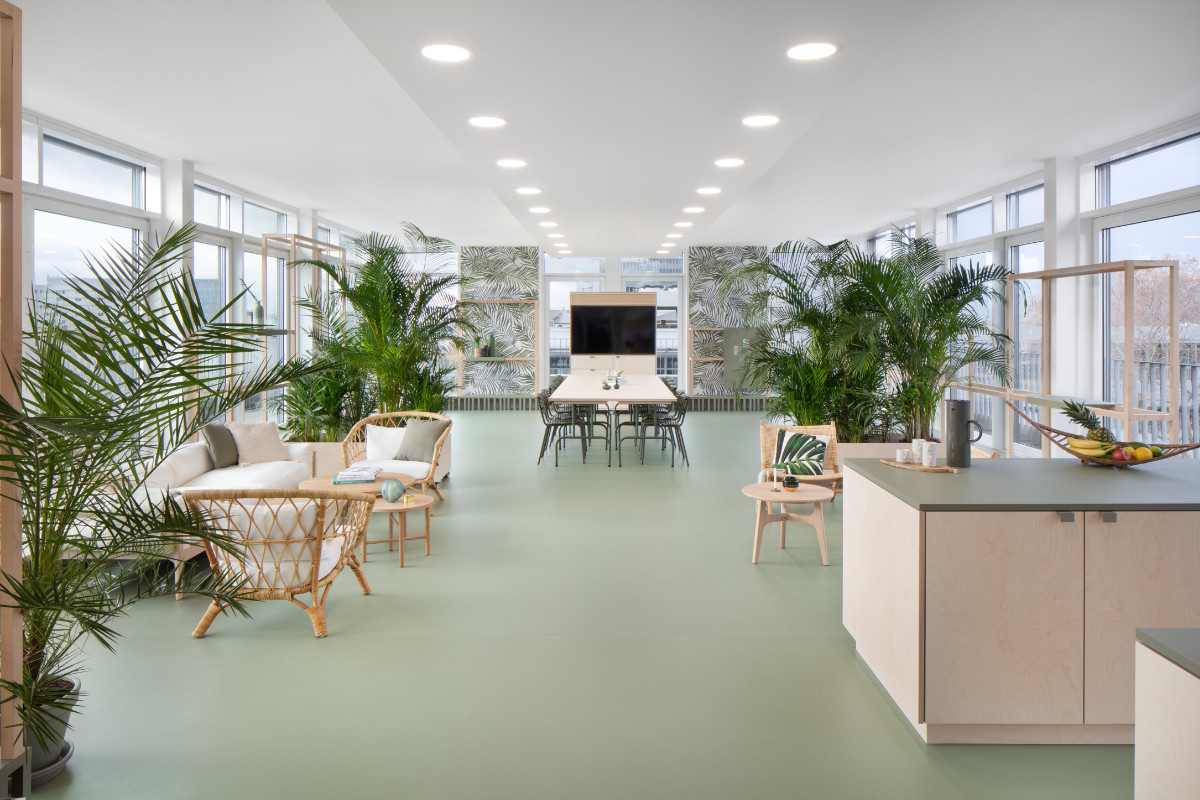
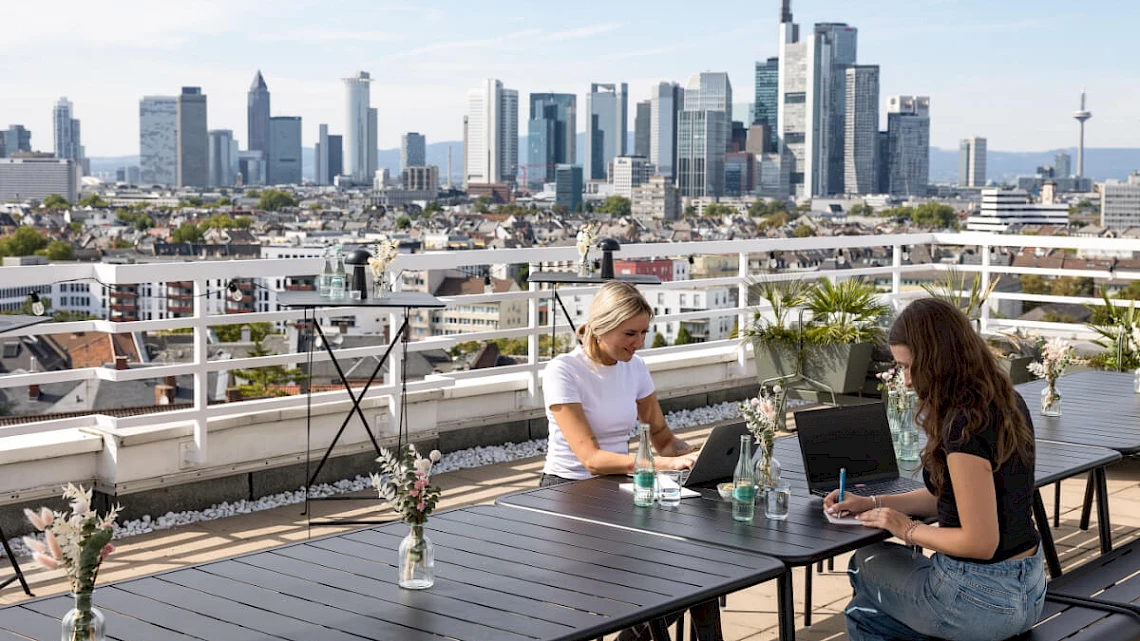
The OutOfOffice locations in Munich, Stuttgart and Frankfurt combine flexible indoor spaces with a creative loft atmosphere, modern technology and rooftop terraces overlooking the city. This makes it possible to combine strategic sessions and shared experiences without complicated changes of venue – for example, a team canvas workshop in the morning, minigolf in the afternoon and a relaxed conclusion with catering.
- Event venues in Munich - for exceptional team-building events
- Event venues in Frankfurt - overlooking Frankfurt’s famous skyline
- Event venue in Stuttgart - overlooking Schillerplatz and the historic old town
FAQs about team-building ideas for companies
Two to four hours are often sufficient for a single activity. If the event is intended to combine strategic work, breaks and a shared conclusion, half a day or a full day is more realistic. What matters is not making the event as long as possible, but creating a schedule without unnecessary time pressure.
Activity stations, quiz nights, art nights, mobile minigolf courses and create-your-own concepts work particularly well for large teams. Small subgroups, clearly defined rotation times and sufficient facilitation are important to ensure that nobody is left simply watching.
An in-person meeting usually has the greatest impact when it is organisationally possible. Alternatively, quizzes, facilitated team canvas sessions, creative activity packages or shared tastings can also be organised in a hybrid format. Remote participants should not simply be connected to the event, but actively involved through their own tasks and equally attentive facilitation.
An event can make conversations easier, but it cannot resolve deep-rooted conflicts on its own. When tensions persist, trust has been damaged or responsibilities remain unclear, facilitated clarification processes, mediation or structural changes are usually more appropriate. Team building can complement this work, but it cannot replace it.